Posts

Are you ready for the Fall Semester? 5 Tips to Start "Write"

Image
Dear Real Academics Are you ready for the Fall semester? If yes, great! If not, I get it. Regardless, here are some tips to make sure you are off to the “write” start — and yes, “write” is intentional… (1) MINDSET - Prioritize your writing. As important as all the meetings, classes you need to prep, and emails you need to answer are, NOTHING is as important as your writing. Writing is what helps you graduate, get promoted, and…most importantly…get your academic research/thinking out into the world. So, get in the mindset — first and foremost — that writing is a priority in your academic work. (2) TOOLS - Use a calendar to map out your first month Whether you use an electronic calendar or a paper based calendar or planner, write out your events for the first month (or, if you can, for the entire semester). My suggestion of how to do this? Write in all the non-negotiable meetings times your administration sets. Write in all your class time and office hours. Write in your scheduled writin...

3 Unconventional Summer Writing Tips

Image
Dear Real Academic, Anyone frying or melting, yet? We hope not! Tiberio and I are certainly getting used to humid, boiling heat here in Miami, Florida (we were in dry, furnace summer heat in Las Vegas, Nevada for 8 years previously which, isn’t any better , in our opinion). But, we are so very thankful for air-conditioning, ice, shade, and water. Of course, if you are in a place where summers are anywhere between 70 and 80 degrees F, then…just stop reading...yup…just stop…just kidding! You can keep reading. :-) I wanted to share 3 tips to keep you writing through the hot summer months: Tip #1: Sleep in Yup. Contrary to any and all productivity recommendations, I am going to recommend you sleep in. Why? Because: (a) You are probably in a time of the year where you don’t have to make a morning meeting or teach a morning class. (b) Sleep is critical for creativity. Disclaimer: Do NOT do this if (a) You have a killer routing going for you and (b) You are NOT even slightly tired, exhaust...

Why is It So Hard to Keep Writing?

Image
Dear Real Academics, I've often hear and have written about how difficult it is to START writing and ways to overcome that difficulty. Here, I want to explore why it may be difficult to KEEP writing and solutions to overcoming that specific difficulty. (1) You know what to do, but you don't want to do it.   Years ago, my mother's good friend (Dr. Barbara Warren) self-published a book titled, Do What You Don't Want To Do: Achieving Excellence as a Procrastinator. Mind you, this book was written by a MULTIPLE time IronMan winner, ultra-marathon runner, and woman who had overcome an incredible amount of obstacles in life through her discipline and commitment to her calling. In fact, she and her twin sister, Angelika, were featured on the documentary, Running on the Sun: The Badwater 135 ,  a documentary about a yearly 135 mile race across Death Valley, California in JULY (Angelica is on the cover). You can watch it for free on YouTube:  https://www.youtube.com/watch?v=dl3...

What Unpacking and Writing Have in Common and Update on Our Move

Image
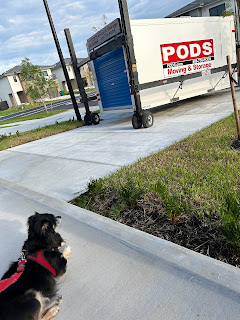
Dear Real Academics, We have been unpacking our house for the last month. Let me preface this by stating that prior to this move, all my other moves had been "college-student" moves, meaning, the most amount of boxes I have ever moved was 14. Yup 14 small boxes. Yup. No furniture and no car either. In my last big move, the car salesman met me at the airport. Let's just say this move was different.  Two large PODS later and 10 months of waiting on a house we are FINALLY in a house and FINALLY unpacking! (Hey, if you didn't try to buy a house in 2022, then definitely check out this hilarious  link   to get a sense of what it was truly like...I literally cried tears of laughter when I watched it...but come back and finish this blog after you watch). Here is my favorite picture of our move. Rocky, our rescue pup, is sitting outside the front of the house watching the first POD arrive. I thought I'd be excited to unpack. In fact, everyone told me it would be like Chris...

Writing in a New Environment To Spark Creativity

Image
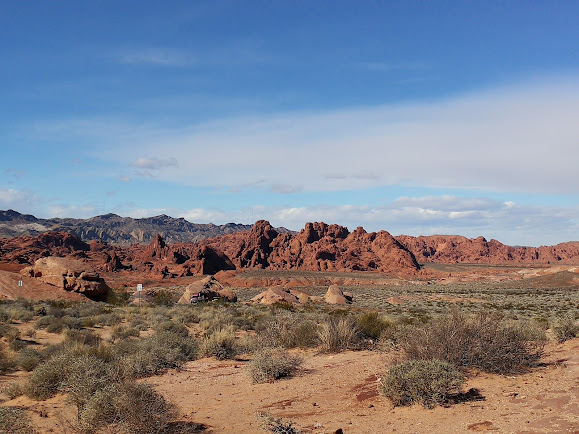
Dear Real Academics, Dr. Garza and I recently had a major change of environment.  I dug up some pictures I've taken to illustrate -- I love taking photos! Here is our previous environment, the desert region of Southern Nevada: and  Here is our current environment, the tropical region of South Florida: Both environments are strikingly beautiful in their own way. But, they are radically different. To read more about my views of Las Vegas, Nevada after living there for 8 years, read this post . This drastic change, however, made me think of a strategy that might help you if you are seeking some dose of creativity in your writing. That is, change your environment. Don't get me wrong... Writing in the same place, at the same time, can be very productive. However, if you want to spark some creativity (given this is your goal), then try changing your writing environment. The change doesn't have to be a huge, dramatic change like in my example and pictures.   In fact, too huge ...

Let's Get Technical: 3 Resources To Help START Writing an Academic Paper

Image
Dear Real Academics, Academic writing is technical by nature.  This technicality makes it both easy and hard. It's easy because it has a very clear structure: Introduction Theoretical Framework Literature Review Method Results/Finding Conclusion But it's hard because all the pieces have to fit together like a puzzle, and they have to fit TIGHTLY.   Not only that, but the combination of the entire research process having to fit into the structure and all the nitty gritty editing make the whole thing quite difficult to write. I've written a blog post on some  common mistakes  academic writers make, and I encourage everyone to take a look. I recommend three resources that can help you get STARTED with writing these technical pieces. Here they go: Becoming an Academic Writer, by Patricia Goodson Whatever style guideline you must adhere to. I happen to use APA. Whatever referencing software your university provides (e.g., Endnotes, Mendeley, Refworks) Other than...

A Thing of Beauty

Image
Dear Real Academics,  I rarely mention this, but I have undergraduate and graduate degrees in English Literature.  My main focus of study spanned the Medieval - Renaissance - Romantic Eras. These time periods had a lasting impression on my views of writing, history, and the human search for beauty and truth. I share this, because February approaching as the month of "love", I was reminded of the poetry from the Romantic era of English Literature -- Wordsworth, Keats, Shelly, Blake, to name some notable authors. That this time period is called "Romantic" is accurate in that the writing is characterized by idealism, feeling, impression, and intense emotion.  I've written before that I have realistic tendencies  in my view of the world, so it may strike you odd that I enjoy this literature immensely -- yes, I have a heart!  Notably, much of the Romantic Era writing is poetry, which is my favorite genre of literature.  With that shared, I wanted to share with ...

Which Season of Academic Writing Are You In?

Image
Dear Real Academics, I've written in the past about a book I enjoyed reading because of the content and because it was so beautifully written: Spiritual Rhythm by Mark Buchanan . The premise of the book revolves around observing life through seasons. With that said, indulge me a bit to think about how seasons might look in terms of academic writing.  And, more importantly, what that season means for you as an academic writer. As you read, think about what season YOU are in. Spring A time of  new,  energy,  and  activity Examples could be: The start of a new project; generating new ideas; starting a new job What the season means for you as an academic writer: Embrace the season of excitement. Use the season to foster collaborations and get involved in new learning activities. Try out new strategies. Read and write different kinds of things. Summer A time of  warmth,  vacation,  and  time Examples could be: A sabbatical year; a writing retre...

Is It Possible to be "Good and Tired"?

Image
Dear Real Academics, I do not normally endorse being tired.  But, the other day I was walking Rocky (my Chiweenie dog), and I saw an older man working hard cutting the limbs off of a big tree. He then proceeded to lift them and put them on the back of his truck. As we walked by, we said "hello" and exchanged the customary, "how are you?" His answer was a chipper, "good and tired". Have you ever been "good and tired"? Is it possible to be both? I think, yes. Like when you finish a good work-out. Or when you accomplish a big task that you've been steadily working on.  Or when...you fill in the blank. Be tired about doing things that are good for you.  Be tired for working to be healthy, for being productive, and for doing work you love.  And, if you need some help orienting yourself to health, productivity, and doing work you love, check out these 3 past blog posts to inspire you (listed by topics). We have more, but here's a start: Health ...

Gifts and Writing

Image
Dear Real Academics, Dr. Garza and I wish you a very Merry Christmas and a lovely holiday season with your loved ones. I hope the Real Academics blog posts have been a gift to you in terms of  insight,  encouragement, and  a sense that you are not alone on this journey.  With that said: Thank you for your readership and for being a part of the Real Academics family.   You're the best gift we could ask for! On that note, we leave you with a question to ponder: How can your writing be a gift to others? Until next time, happy writing, productivity, and truth seeking, Maggie ,  Tiberio ,  Rebekah, and Rocky Want more? Watch  what's new. Subscribe  to our newsletter. Share this post with a friend (share link below). 

What Are You Willing to Pay For? $700/minute?!

Image
Dear Real Academics, I previously wrote a blog post titled, " What are you Willing to Pay For "?  I noticed a lot of interest in the topic, so I wanted to revisit the idea. You may or may not have heard of  Ramit Sethi , an American personal finance advisor and entrepreneur.  I recently received one of his emails with the headline "Why I Paid $700 a Minute".  The email was so thought-provoking that I'm paraphrasing it with some quotes in blue below. But,  stick with me to the very end...I promise there is a connection to academics, and to YOU. Ramit tells the story of how he bought Jay Abraham’s book  Getting Everything You Can Out of All You’ve Got , and applied to take Abraham's course for small-business owners. The course cost $25,000/year and Ramit had to fly from New York City to Los Angeles every 15 months to meet with Abrahams for 45 minutes. Bottom line: Ramit calculated that it cost him $700 a minute to talk with Abrahams. Yet, here’s what he says ...

A GREAT Exercise in Optimism This Thanksgiving

Image
  Dear Real Academics, This week, I'd like to share a helpful exercise I came across from  Ramit Sethi , a financial coach.  For those interested in the source: Ramit admits that he finds being positive hard. While he  acknowledges  that external circumstances can influence us in very negative ways, he believes positivity is a personal choice .  So, here goes the exercise (Ramit's words are in blue): Today, I want you to answer these three questions: What are all the sources of negativity in your life? Be honest with yourself and write them all down — friends, websites you visit, bars, negative thought patterns, etc. Of those, what are the top three things from that list that really bring you down? For each of those three things, decide how you’re going to flip it from negative to positive. For example, let’s say I hate cleaning my house. It takes a long time, it’s tiring, and it's boring. Here’s how I’d flip it from negative to positive: I can clean while ...

3 Questions to Ask Yourself in Your Academic Journey

Image
I'd think that most of you want to succeed. I know I do.  I mean, I was the "I'd rather die than fail"-type before life taught me a few lessons...read more about that here if interested. I'm not saying you should not want to succeed. You should.  And I'm not saying you cannot succeed. You can. What I want to say is that if you want to succeed, get ready for a journey with moments of success and moments of failure.  Think about books and films that become "classics". What do they have in common?   Usually, a hero character on a journey with a beginning, middle, and end.  You read/see where the hero is in the beginning.  The hero encounters a difficulty in the middle.  The hero perseveres and comes out transformed in the end, wherein lies the success (be it a tragedy or comedy). The key to the successful transformation?  The hero keeps moving forward. But, forward is not always in a straight line.  Maybe the hero is going one way and life...

Burnt-out, Cynical, or Just Plain Tired? Read on for One Powerful Remedy

Image
Dear Real Academics, This time of the year, there is just so very much going on as the year draws to an end. If you are feeling burn-out, cynicial, or just plain tired, consider doing this one thing: Make a gratitude list.  I learned about this strategy from a friend and mentor who shared Anne Voskamp's, book, A Dare To Live Fully Right Where You Are: 1,000 Gifts.  The idea behind the book is to write specific things you are grateful for each day, until you reach a list of 1,000 things (and, then, start over!). Why? Because the practice of gratitude is transformational.  Gratitude can actually change your mindset, outlook, and mood. And gratitude in small increments, like any habit, can be incredibly powerful in that transformation (think about incremental change in exercise, diet, and productivity habits). How? All you need is a plain notebook and a pen. Before you go to sleep, write down at least 1 specific thing you are thankful for, for the day.  Some days, this...

Are You Living a Fulfilled Work Life? Answer These 3 Questions to Get Clarity and Confirmation on Your Next Steps

Image
Dear Real Academics,  Are you living a fulfilled work life?  I’ve seen people use this logic on social media: We live in a burn-out culture. Therefore, we should  do the minimum required of us at work.  That sounds like a sad way to live out my work life.  To be clear, I’m not advocating burning out in your work life. Nor am I advocating mediocracy. I AM advocating thriving in your work life. [Disclaimer: This post is not about self or time management. These are important concepts. There is no shortage of helpful books and podcasts on the topic. This post is about taking a step back and reflecting on the “bigger picture” regarding fulfillment at work].  If you want to thrive in your work life as an alternative to sad mediocrity or unhealthy burn-out, read on to start taking steps in the right direction:  (1) Answer: What does a fulfilled life mean for you?  A career coach I respect, Ken Coleman , defines a fulfilled life as… “being the person yo...